
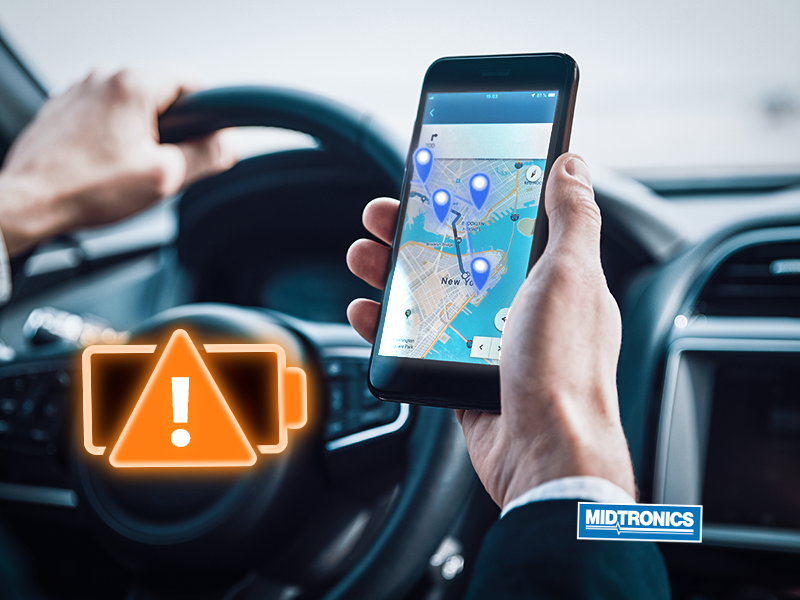
Rideshare and fleet vehicle batteries can face a harsher environment than batteries in personal vehicles, increasing the chances for early failure. High mileage is part of the equation, but frequent starts, accessory use, communications gear, and demanding duty cycles can all affect the battery. The impact depends on how the vehicle is used and whether its charging system has enough time to replenish the energy being used. Regular battery testing can help identify declining performance before a failure takes a vehicle out of service.
It’s About Duty Cycle, Not Just Mileage
A rideshare vehicle covering 50,000 miles per year clearly sees more use than a typical personal vehicle. But mileage alone doesn’t explain why its battery may experience more stress.
Consider a typical rideshare shift. The vehicle may operate for hours while the driver makes stop after stop, doors open frequently, and climate control, phone chargers, navigation, and infotainment systems are constantly in use.
Fleet duty cycles vary even more. A delivery van might make dozens of stops per shift, while a service vehicle may power communication equipment, warning lights, tools, or an inverter. And those vehicles might be used for back-to-back shifts, or even in service for 24 hours a day. Other fleet vehicles can sit for days while telematics and security systems continue drawing power.
Two identical vehicles with the same mileage can place very different demands on their batteries. Understanding how a vehicle is actually used provides more useful information than mileage alone.
Frequent Starts Can Add Up
Starting an ICE vehicle requires a large current from the 12-volt battery. Under normal conditions, the charging system restores that energy while it’s being driven. Problems can develop when it’s started frequently for short trips, without enough run time for the battery to recover fully.
This is often the case for delivery, service, and other fleet vehicles that make repeated stops. Depending on operating procedures, the engine may be shut down and restarted dozens – or even more than a hundred – times during a shift.
Modern start-stop systems are designed to accommodate frequent cycling and typically use batteries engineered for the application like AGM technology. However, those batteries still need to remain healthy and have enough charge to handle the demands placed on them.
As battery performance declines, a demanding duty cycle can expose weakness sooner than easier driving might.
Accessory Loads Can Change the Equation
Today’s vehicles have many more electrical systems, and commercial vehicles tack on additional loads. Depending on the application, they can include:
- Navigation, smartphones, tablets, and chargers
- Telematics, GPS tracking, and fleet management equipment
- Dash cameras
- Warning lights, radios, and communication systems
- Inverters
- Other job-specific equipment
Some of these systems continue drawing power when the engine is off. For example, a rideshare driver waiting for the next passenger might continue using vehicle accessories, while a parked fleet vehicle may have telematics communicating in the background.
The concern comes in when energy consumption is more than what the charging system has time to put back.
More Driving Doesn’t Always Mean a Fully Charged Battery
It’s easy to assume a high-mileage vehicle must have a fully charged battery because it’s constantly being driven, although that’s not necessarily the case. Modern charging systems adjust their output according to battery condition, vehicle load, operating conditions, and other factors. At the same time, the vehicle continues using electrical energy.
Frequent short trips can make battery recovery more difficult. A fleet vehicle may rack up hundreds of miles over a shift, but frequent starts and their unique accessory needs can still leave the battery at a lower state of charge than expected.
A battery may be healthy but consistently undercharged because of its operating conditions. If that pattern continues, battery performance and life can eventually suffer.
Rideshare Vehicles Present Their Own Challenges
Rideshare vehicles don’t always fit the traditional definition of a fleet vehicle, but their operating patterns can be similar. A driver may operate for hours in urban traffic with navigation running, a phone charging, climate control operating, and passengers using electrical accessories. The same vehicle might then sit unused for several days.
That combination makes battery condition difficult to judge based solely on age or mileage. A three-year-old rideshare battery likely has gone through a very different duty cycle compared to the same battery in a commuter vehicle.
That’s why battery service recommendations need to be based on measured condition rather than age or mileage alone.
Battery Failure Costs More When the Vehicle Makes Money
For a personal vehicle owner, a dead battery is inconvenient. For a fleet operator or rideshare driver, it can mean lost revenue. A fleet vehicle that doesn’t start can miss deliveries or service calls, sidelining the driver as unproductive. The business may need to dispatch another vehicle, while a rideshare driver with an out-of-service vehicle can’t accept trips.
This increases the value of preventative battery testing. Finding a weak battery during scheduled maintenance gives the operator an opportunity to address it at a convenient time rather than waiting for a no-start.
Build Battery Testing into Fleet Maintenance
Fleet maintenance is already designed around reducing unexpected downtime, making battery testing a natural part of the process. Rather than waiting for a complaint, batteries should be tested during oil changes, tire service, inspections, or other scheduled maintenance. Rideshare vehicles can follow a similar approach during routine service.
Consistent testing can help technicians:
- Identify battery health trends before a no-start
- Recognize batteries repeatedly coming in at a low state of charge
- Track changes in battery condition between visits
- Investigate charging or electrical problems before replacing a battery unnecessarily
Test history can be particularly useful. A single result shows battery condition at that moment, while results collected over multiple visits can reveal declining performance. That can turn battery replacement from an unexpected breakdown into a planned maintenance decision.
Match Battery Service to How the Vehicle Is Used
There’s no universal mileage or age at which a rideshare or fleet battery will fail. Battery type, climate, charging strategy, electrical loads, and duty cycle all affect performance.
A delivery van making dozens of short stops has different battery demands from a fleet vehicle spending most of its day on the highway. Likewise, a rideshare vehicle operating ten hours per day experiences different conditions from one driven only on weekends.
Understanding those differences, combined with regular battery testing, gives technicians and fleet managers better information for maintenance decisions.
For rideshare drivers and fleet operators, incorporating battery testing into routine maintenance can help identify declining performance before it becomes an unexpected no-start, keeping revenue-producing vehicles on the road. Midtronics testing equipment is here for service shops and fleets to keep vehicles on the road and staying productive.
FAQs/People Also Ask
- Do fleet vehicle batteries wear out faster?
They can. Demanding duty cycles, frequent starts, accessory loads, and charging conditions can place additional stress on fleet vehicle batteries.
- Does high mileage cause battery failure?
Not directly. How those miles accumulate, along with charging conditions, electrical loads, temperature, and battery condition, matters more than mileage alone.
- Why can a high-mileage vehicle still have a low battery state of charge?
Frequent starts, short operating periods, and heavy electrical loads can consume energy faster than the charging system restores it.
- Should fleet batteries be tested during routine maintenance?
Yes. Regular testing can identify declining battery performance before it causes an unexpected breakdown or vehicle downtime.
- Do rideshare vehicles put more demand on their batteries?
They can. Long operating hours, device charging, climate control, frequent stops, and periods of inactivity can create demanding battery conditions.
- Why is battery test history useful for fleet vehicles?
Test history can reveal declining performance or recurring low state of charge that may not be obvious from a single test.