
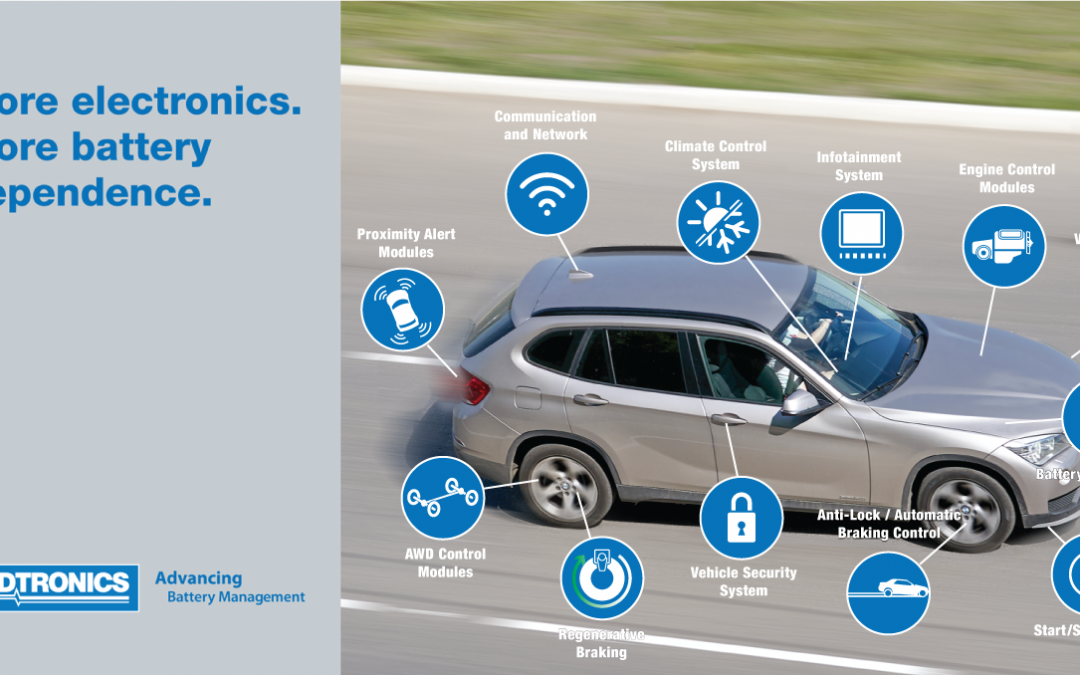
Vehicle electrification isn’t just about electric vehicles (EVs).
Key Takeaways
- Vehicle electrification isn’t only about EVs. It affects nearly every new vehicle.
- Fuel efficiency mandates and consumer demand for more features are raising battery performance requirements.
- A modern battery needs cranking power, reserve capacity, and charge acceptance, not just CCA.
- Failures can show up as disabled start/stop, lower fuel economy, faster battery aging, or no-starts, often with little warning.
- Battery diagnostic equipment should evaluate all three performance requirements.
The mandates for fuel efficiency and consumers demanding more features is increasing battery performance requirements, which leads to the concept of vehicle electrification across all new vehicles, not just EVs.
The new performance requirements equate to new battery failures. In today’s world the battery must not only have strong cranking capability (cranking health or CCA), but it must be able to support small loads over time (reserve capacity), and quickly and effectively accept charge when needed (charge acceptance).
On older vehicles, the primary purpose of the battery was to provide hundreds of amps needed to crank the engine and then let the engine’s power drive all the other electrical needs. The alternator was designed to fully recharge the battery, to ensure it’s ready to start your engine again. But for a battery in today’s vehicles, it isn’t as straightforward.
Gone are the days where you could literally hear the battery failing over time, before your car doesn’t start. The battery relies on the power management system to charge the battery back to a full state of charge while driving. However, with the additional loads being placed on the battery, it may discharge faster than it should (per the battery’s reserve capacity specification) and thus not returning to a full state of charge prior to the next starting event, regardless of its cranking health. Similarly, if the battery doesn’t accept charge at its specified rate, the battery may not return to the correct state of charge during normal use.
Depending on the vehicle, the examples described above could cause a multitude of performance issues: the start/stop functionality could turn off to preserve battery energy, the vehicle’s fuel efficiency may be reduced, the battery could degrade at an expedited rate, and it could even lead to no-start situations.
Automotive batteries today need to support more than just cranking (CCA). They must effectively support small loads over time (reserve capacity), and they must quickly and effectively accept charge when needed (charge acceptance).
Why Electrification Reaches Every New Vehicle
Even a gasoline-powered sedan now carries far more electrical load than one built twenty years ago. Start-stop systems shut the engine off at every red light and restart it moments later. Driver-assistance sensors and cameras stay awake. Infotainment screens, heated seats, connected services and telematics units all add to the draw. Regulations push automakers toward better fuel economy, and many of these features are how they get there.
Every one of those changes lands on the 12-volt battery. It’s no longer a simple starter that sits quietly between engine starts.
The Three Jobs of a Modern Battery
Cranking health is the one most people know about. It’s the battery’s ability to deliver a big burst of current to turn the engine over, and it’s what the cold cranking amps (CCA) rating describes.
Reserve capacity is the ability to support small loads over time, like the electronics that stay powered while the engine is off, or the systems that keep running while a start-stop vehicle waits at a light. A battery with low reserve capacity runs down faster than it should.
Charge acceptance is how quickly and effectively the battery takes charge back in while driving. With short trips and heavy loads, there isn’t much time to recover, so a battery that charges slowly never gets back to full.
A battery can be strong in one area and weak in another. One with great cranking power but poor charge acceptance, for example, may start the car today and strand it next week.
What Failure Looks Like Now
On older vehicles you could often hear a battery wearing out. The engine cranked a little slower each week, and the driver got a warning. Modern vehicles hide much of that. Drivers may notice that start-stop stops working, fuel economy slips, warning lights appear or electronics behave strangely. Then one morning the car doesn’t start.
Testing for the Way Batteries Are Used
A test that looks only at cranking amps misses most of the picture. Service providers need equipment that evaluates cranking health, reserve capacity and charge acceptance together, and that can give a clear decision even when the battery is low on charge. Testing at every visit, recording the result and explaining it to the customer helps catch a failing battery before it strands them.
Explaining It to Customers
Most drivers still think of a battery as something that either works or doesn’t. A short explanation helps. Today’s vehicles ask more of the battery than starting the engine, so a battery that served well for years in an older car may wear out sooner in a newer one. Showing a printed result that covers all three performance areas makes the recommendation easier to follow, and it gives the customer a clear reason to act before the car lets them down.
Frequently Asked Questions
What is vehicle electrification?
It’s the shift toward more electrical systems and features across all new vehicles, not just EVs. Fuel efficiency mandates and consumer demand for more features are the main drivers.
Why are batteries working harder in modern vehicles?
They support more than starting the engine. Start/stop systems, driver-assistance features, infotainment, and other electronics add loads, and the battery relies on the power management system to return to a full state of charge while driving.
What are cranking health, reserve capacity, and charge acceptance?
Cranking health (CCA) is the battery’s ability to deliver the large burst of current needed to start the engine. Reserve capacity is its ability to support small loads over time. Charge acceptance is how quickly and effectively it takes charge back when needed.
What problems can a weak battery cause in a modern vehicle?
Start/stop functionality may switch off to preserve battery energy, fuel efficiency may drop, the battery may degrade faster, and the vehicle may eventually fail to start.
How should shops test batteries in modern vehicles?
Use diagnostic equipment that evaluates cranking health, reserve capacity, and charge acceptance together, not just cranking amps. Customers are depending on the test to reflect how the battery actually performs in today’s vehicles.
If you are a battery service provider, it is vital your diagnostic equipment considers these performance requirements when evaluating the battery’s health. Your customers are depending on it.