
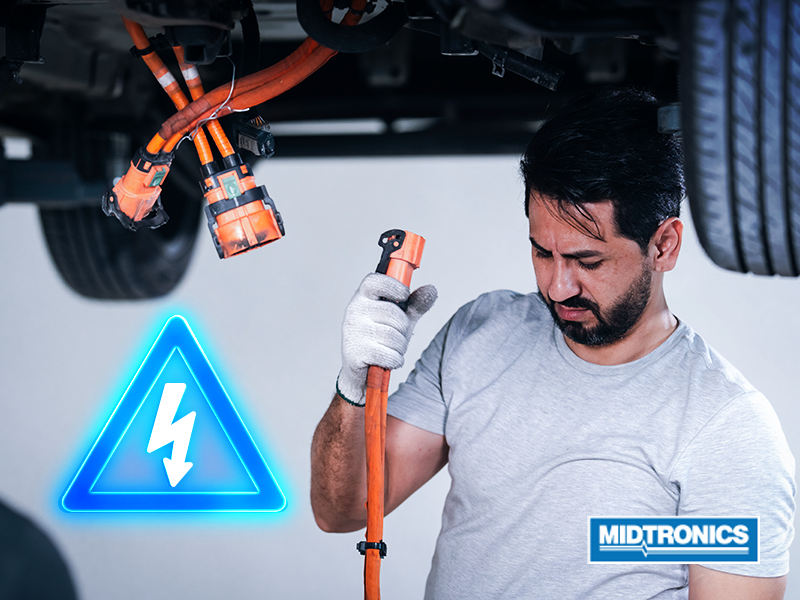
Finding a damaged high-voltage cable on an EV changes how the job needs to be handled. Whether the damage came from a collision, road debris, or an electrical fault, technicians can’t assume the cable is safe just because the vehicle is parked or switched off. Before anyone gets near the damaged area, the shop needs to control vehicle movement, assess the immediate hazards, and follow the manufacturer’s high-voltage safety procedures. The Midtronics xIM-100 EV Immobilizer can help with one important part of that process.
Recognizing High-Voltage Cable Damage
High-voltage cables carry power between major EV components, including the traction battery, inverter, and electric drive unit. They’re typically orange, making them easy to identify during an inspection.
Damage isn’t always obvious, and it isn’t necessarily what brought the vehicle into the shop. A technician might spot a crushed cable during an underbody inspection or find damaged insulation while looking over a vehicle after a collision. The EV may have driven into the bay without any noticeable problems.
Crushed sections, damaged insulation, exposed conductors, loose connections, or signs of overheating should all raise concern. If there’s suspected high-voltage cable damage, work around the affected area needs to stop until qualified personnel can assess the situation.
Immobilize the EV Before Work Begins
One concern with high-voltage damage is whether the EV can still move under its own power. The vehicle might be in Park, the instrument cluster could be dark, and there may be no sound coming from the drivetrain. None of that proves the propulsion system is disabled.
That’s a particular concern when someone is working underneath the vehicle or near the wheels. An unexpected movement, even a short one, can put a technician in danger.
The Midtronics xIM-100 EV Immobilizer helps mitigate this risk. It connects through the EV’s charge port and signals that the vehicle is plugged in, preventing it from moving under its own propulsion when the system is working as intended. LED indicators also provide a visible indication of immobilization status, so technicians don’t have to rely on whether the vehicle appears to be switched off.
The xIM-100 can be connected without accessing high-voltage components. But if the charge port is damaged, the device can’t be connected properly, or status can’t be confirmed, the shop needs to use an alternative method from the manufacturer’s documentation.
Immobilization Doesn’t Mean the High-Voltage System Is Safe
Preventing an EV from moving and making its high-voltage system safe to work on are two separate jobs. The xIM-100 handles the mobility side. It doesn’t disconnect the traction battery, discharge high-voltage components, or verify that a damaged cable is free of voltage.
Even with the vehicle immobilized, technicians still need to follow the manufacturer’s shutdown and isolation procedures, including lockout/tagout, appropriate PPE, and voltage verification.
Damaged cables add a layer of uncertainty. Insulation may be compromised, connectors may be damaged, and life-threatening voltage may still be present even if the vehicle isn’t showing any warning messages. Nobody should touch, move, disconnect, or probe the damaged cable until qualified personnel have completed the required safety checks.
Keep the Work Area Under Control
A damaged high-voltage cable doesn’t affect only the technician who found it. Someone else might walk into the bay to grab a tool, move the vehicle, or carry out another inspection without knowing what’s been discovered.
Once damage is suspected, the shop needs to keep people away from the affected area and make the vehicle’s status clear. The immediate priorities include:
- Stop work around the damaged cable and keep unauthorized people out.
- Watch from a safe distance for smoke, unusual heat, odors, or other signs of a growing hazard.
- Secure the vehicle against unintended movement, using the xIM-100 where appropriate and confirming its status.
- Clearly flag the EV as having suspected high-voltage damage with tags and signs.
- Leave further assessment to qualified personnel only.
If there are signs of fire, thermal activity, or another immediate danger, everyone should move away, the shop’s emergency response plan should be activated, and the appropriate responders contacted.
Don’t Rush the Safety Checks
High-voltage damage doesn’t always look like an emergency. An EV might come in for a noise, a warning light, or a collision inspection, and the cable damage isn’t discovered until it’s already on the hoist.
Now the technician has a problem. The vehicle is taking up a bay, another appointment is waiting, and nobody knows whether the high-voltage system is safe. That’s not the time to keep working just to get the job finished.
Service managers need to give technicians room to stop and assess the situation. Depending on the damage, the vehicle may need to remain in a controlled area while trained staff review the manufacturer’s procedures and determine what happens next.
The next technician also needs to know what’s going on. Document the damage, the vehicle’s status, and which safety checks have been completed. That prevents someone from picking up the job later and assuming everything was already checked.
Make EV Safety Part of the Initial Assessment
Technicians are increasingly encountering high-voltage components during jobs that have nothing to do with electrical repairs. It happens on hybrids as well as EVs, and the number of vehicles are only growing. An underbody inspection or collision assessment can turn up cable damage that changes how the whole job gets approached.
The response starts with recognizing the hazard, controlling vehicle movement, and keeping people away from the affected area. The Midtronics xIM-100 EV Immobilizer helps with the movement side by preventing unintended movement and giving technicians a visual indicator of immobilization status.
It’s one part of a larger safety process, alongside OEM procedures, proper training, and high-voltage safety equipment. For a shop dealing with a damaged EV cable, having those precautions in place before work begins is far better than figuring them out after someone gets hurt.
FAQs/People Also Ask
- Is a damaged EV high-voltage cable dangerous if the vehicle is off?
Yes. High-voltage components can stay energized even when the vehicle seems to be switched off.
- What should a technician do after finding a damaged high-voltage cable?
Stop work, restrict access, assess immediate hazards, and follow OEM safety procedures before further inspection.
- How does the xIM-100 help with EV cable damage?
It helps prevent unintended propulsion and provides a visual indication of immobilization status before work begins.
- Does the xIM-100 disconnect high-voltage power?
No. It deals with vehicle movement, but doesn’t isolate or de-energize high voltage.
- Can an EV still move with a damaged high-voltage cable?
Potentially, yes. Cable damage doesn’t necessarily mean the vehicle’s propulsion system is disabled.
- Who should assess a damaged EV high-voltage cable?
Technicians qualified for high-voltage EV service, following the manufacturer’s safety procedures and shop protocols.