
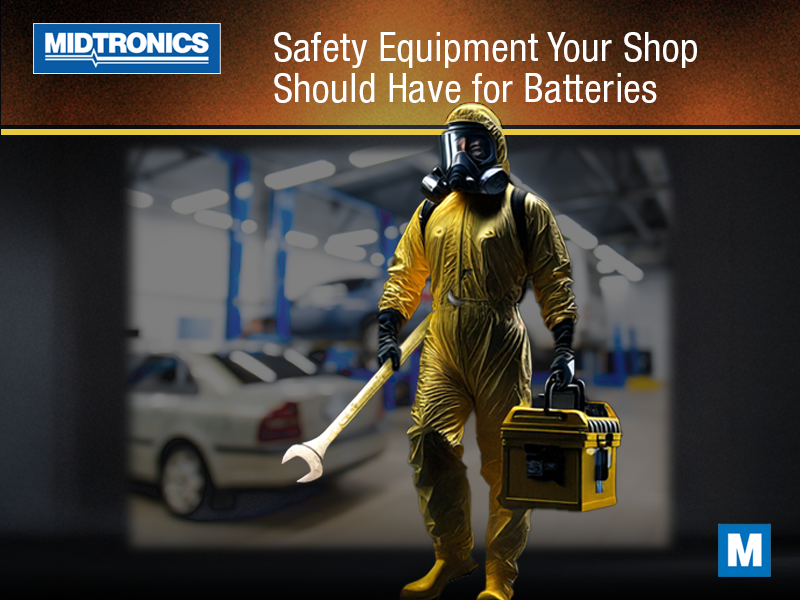
Batteries are a staple in every automotive repair shop, but they come with their share of hazards. Whether it’s acid spills, electrical shorts, or even the risk of fire, handling batteries safely requires the right tools and precautions.
Key Takeaways
- Every shop handling batteries needs acid-resistant gloves, eye protection, and a neutralizing wash station as minimum safety equipment.
- EV high-voltage work requires Class 0 insulating gloves rated to 1000V, insulated tools, and HV-rated face shields — standard shop PPE is insufficient.
- Fire suppression equipment capable of handling lithium-ion thermal runaway should be accessible in any shop servicing EV batteries.
- Training on proper PPE use is as important as having the equipment — gloves with pinholes or cracks provide no protection.
For service managers, parts managers, and technicians, having the proper safety equipment in the shop is more than just a compliance requirement – it’s part of creating a safe, efficient, and professional environment. Here’s a rundown of the safety equipment every shop should have for handling, storing, and disposing of batteries.
Personal Protective Equipment
When working with batteries, protecting yourself and your team is the first priority. Personal PPE serves as the frontline defense against acid splashes, sparks, and other hazards. You should have readily available PPE items such as:
- Eye protection. Batteries can emit gases or leak acid during charging, testing, or handling. Safety goggles or face shields provide a barrier that protects eyes from potential injuries.
- Gloves. Acid-resistant gloves are a must. Whether someone is lifting a battery or cleaning up a spill, these gloves shield skin from chemical burns and irritation.
- Aprons. Accidental spills are part of the job when handling batteries. Acid-resistant aprons or lab coats offer an extra layer of protection for clothing and skin.
Make sure PPE is always accessible and in good condition and that only trained service and parts personnel are handling batteries. Regular training on proper usage can help ensure employees are fully protected.
Spill Containment and Cleanup Supplies
Accidental leaks and spills can happen even when batteries are handled carefully. Being prepared with the right containment and cleanup supplies can prevent a small incident from becoming a big problem.
Battery spill kits should be on hand and usually include absorbent pads, acid neutralizers, and cleanup tools designed for battery acid. They allow your team to handle spills quickly and efficiently. Storing batteries on acid-resistant mats or trays helps contain any leaks before they spread. This protects your workspace and reduces cleanup time.
Having these supplies on hand ensures that your shop can respond promptly to spills, minimizing risks to people and equipment. And avoid stacking batteries on top of each other, as well as avoid the potential for other items to fall on top of new batteries or those ready for disposal.
Ventilation
Batteries, especially lead-acid ones, can emit hydrogen gas during charging. Without proper ventilation, this gas can accumulate and create a risk of explosion.
A well-ventilated charging area is a must. Fume hoods or exhaust systems help remove harmful gases from the workspace, keeping the air safe to breathe and reducing fire risks. If your shop doesn’t have a designated ventilation system for battery charging, consider upgrading your workspace to include one.
Battery Handling Tools
Batteries are heavy, awkward to handle, and often contain corrosive materials. Using the right tools not only makes handling safer but also prevents damage to the batteries themselves.
Lifting straps or carriers allow you to lift and transport batteries safely. They reduce the strain on staff and help prevent accidental drops or pulled muscles that could cause lost work.
Sparks near a battery can lead to dangerous situations, especially when flammable gases are present. Non-sparking tools made from materials like brass or bronze are designed to prevent accidental ignition, especially if you know the risk is higher for some reason. Investing in proper handling tools protects both your team and your shop equipment.
Eye Wash Stations and Emergency Showers
Accidents happen, even in the most safety-conscious environments. Being prepared for the worst ensures that injuries can be addressed quickly and effectively.
In the event of an acid splash, a properly located and fully functional eye wash station can prevent serious injuries. These should be readily accessible to everyone in the shop, well marked for identification, and checked regularly to ensure they’re operational.
For larger spills or exposures, an emergency shower provides immediate decontamination. This equipment is essential for reducing the possibility of harm in severe situations.
Both eye wash stations and emergency showers are critical for complying with workplace safety standards and protecting your team.
Fire Safety Equipment
Some batteries, particularly lithium-ion ones, pose a risk of fire if damaged or improperly handled. It’s true whether it’s for high-voltage EV batteries or Li-ion batteries in some equipment in the shop. Having the right fire safety equipment can make all the difference in an emergency.
Unlike standard fire extinguishers, Class D fire extinguishers are specifically designed for fires involving combustible metals, including those found in lithium batteries. Don’t assume your standard fire extinguishers will be sufficient.
Storing batteries in fire-resistant cabinets minimizes the risk of fires spreading in case of an incident. These cabinets are especially important for lithium-ion battery storage. If you’re working on a high volume of Li-ion batteries, this cabinet is an absolute must!
Every shop should also have a clear fire safety protocol and conduct regular drills to keep employees prepared.
Proper Storage and Disposal Equipment
Storing and disposing of batteries properly is just as important as handling them safely. The right equipment ensures batteries remain secure and minimizes environmental risks.
- Battery storage racks. These racks keep batteries upright and secure, reducing the risk of leaks or accidental damage. Proper storage also helps maintain the batteries’ performance and lifespan while on the shelf before they’re sold.
- Recycling bins and disposal containers. Batteries can’t be tossed in the trash. Acid-resistant, clearly labeled containers make it easy to collect used non-automotive batteries for recycling or disposal to comply with local regulations.
Having a designated area for battery storage and disposal shows customers that your shop takes safety and environmental responsibility seriously.
Diagnostic and Testing Equipment
Testing batteries is a routine task in any repair shop, but it should be done with the right diagnostic tools. Safety enters the equation as low-quality or obsolete tools aren’t always capable of testing newer batteries, whether EFB, AGM, or Li-ion. Older tools can still be valuable in certain spaces, but any equipment that’s being used regularly should be newer and able to cover the complete spectrum of 12V batteries to avoid false test results or vehicles that aren’t getting tested.
Conclusion
Having the right safety equipment for battery handling, storage, and disposal is a non-negotiable aspect of running a professional repair shop. From PPE and spill containment supplies to fire safety gear and diagnostic tools, every piece of equipment plays a role in protecting your team and your business.
Take the time to evaluate your shop’s current safety setup. Are there gaps that need addressing? Investing in the right equipment now can prevent costly accidents later and shows your commitment to a safe, professional environment. A well-equipped shop doesn’t just comply with regulations – it earns trust from employees and customers alike.
Frequently Asked Questions
What safety equipment does a shop need for 12V battery work?
For standard 12V lead-acid and AGM batteries: acid-resistant nitrile or neoprene gloves, ANSI-rated safety glasses or goggles (not just a face shield), a baking soda and water neutralizing solution for acid spills, and good ventilation to handle hydrogen gas during charging. These are minimum requirements — a full face shield and apron are better when handling damaged or leaking batteries.
What PPE is required for high-voltage EV battery work?
EV high-voltage work requires: Class 0 rubber insulating gloves (rated to 1000V) with leather protectors, ANSI-rated HV face shields (not just safety glasses), insulated tools rated to at least 1000V, and HV-rated rubber matting at the work area. Technicians must also complete formal HV safety training before working on EV battery systems.
How do you handle a leaking lead-acid battery safely?
Put on acid-resistant gloves and eye protection immediately. Contain the spill with absorbent material. Neutralize the acid with a baking soda solution (1 pound per gallon of water) and allow it to fizz completely before wiping up. Dispose of contaminated material per local hazardous waste regulations. Never use a shop rag to wipe acid — it can cause burns and spread contamination.
What fire suppression is needed for EV battery fires?
Lithium-ion battery fires require large volumes of water to cool the cells — CO2 and dry chemical extinguishers are ineffective at stopping thermal runaway. Class D extinguishers work but are expensive and not always available. Shops should have a water source capable of sustained flow and should call fire department immediately if a thermal runaway event begins. Do not try to fight an active EV battery fire with standard extinguishers.
Do shops need special ventilation for battery work?
Yes. Charging lead-acid batteries produces hydrogen gas, which is explosive in concentrations above 4% in air. Battery rooms or charging areas need ventilation that prevents hydrogen accumulation — typically cross-ventilation or exhaust fans near the ceiling where hydrogen collects. EV battery work also requires ventilation due to potential off-gassing from damaged cells.
How often should battery safety equipment be inspected?
Rubber insulating gloves should be electrically tested every 6 months and visually inspected before each use — any crack, pinhole, or ozone degradation means immediate replacement. Eye protection lenses should be replaced when scratched or pitted. Neutralizing solution should be checked regularly to ensure it hasn’t been contaminated. PPE that fails inspection should be removed from service immediately, not “used until the next order arrives.”