
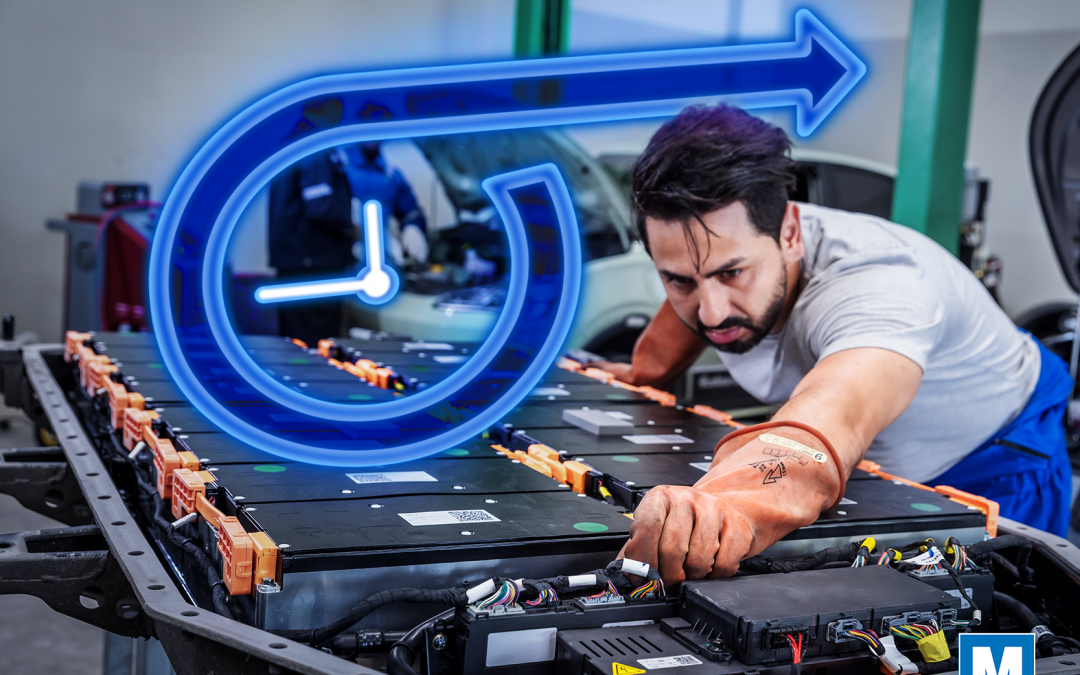
Electric vehicles have fewer moving parts than internal combustion engine (ICE) vehicles, so many customers assume they’ll spend less time in the service bay. In reality, many EV repairs require additional safety procedures, more extensive diagnosis, and software-related tasks before any repairs begin. Understanding these extra steps helps service advisors explain repair timelines clearly, set realistic expectations, and build customer confidence throughout the service process.
Key Takeaways
- Routine EV maintenance takes about as long as on an ICE vehicle. Diagnostics, charging complaints, and battery issues take longer.
- High-voltage safety comes first: verifying system status, isolating the HV circuits, using protective equipment, and confirming it’s safe to work.
- Diagnosis often takes longer than the repair itself because EV concerns have many possible causes.
- Software updates, calibrations, and module programming are part of many EV repairs and need stable power and verification.
- Battery evaluation goes beyond a voltage reading, and the high-voltage battery often isn’t the real cause of the complaint.
- When advisors explain the reasons behind the timeline, customers move from frustration to trust.
Why Customers Expect EV Service to Be Faster
It’s easy to understand where the misconception comes from. Customers hear that EVs don’t need oil changes, spark plugs, timing belts, or transmission service. Even brake replacements are less frequent. They naturally assume every service visit should be quick.
Routine maintenance often is. Tire rotations, cabin air filter replacements, and brake inspections generally take about the same amount of time as they do on an ICE vehicle. The challenge comes when the visit involves diagnostics, warning lights, charging concerns, or battery-related issues.
Unlike many traditional repairs, EV service frequently begins with gathering data rather than replacing components. That investigation takes time, even if the eventual repair is relatively straightforward.
Helping customers understand that distinction early prevents frustration later.
Safety Procedures Always Come First
One of the biggest differences between servicing an EV and an ICE vehicle is the emphasis on high-voltage safety. Before technicians can inspect or repair many EV systems, they must follow manufacturer procedures to de-energize or isolate the high-voltage battery. Depending on the vehicle and repair, that process may include:
- Verifying system status
- Disconnecting high-voltage circuits
- Using specialized personal protective equipment
- Confirming the system is safe before work begins
These aren’t optional steps or unnecessary dealership policies. They’re required procedures designed to protect technicians and prevent damage to the vehicle.
Service advisors don’t need to explain every technical detail to customers, but it helps to emphasize that these precautions are similar to safety procedures followed in aviation or industrial electrical work. Spending extra time upfront helps prevent serious problems later.
Diagnostics Often Take Longer Than the Repair
Many EV concerns can’t be diagnosed with a quick visual inspection.
A warning light, reduced driving range, charging complaint, or intermittent performance issue may have a bunch of possible causes. Before replacing any parts, technicians need to verify exactly what’s happening inside the vehicle.
That process can include reviewing fault codes, analyzing live vehicle data, checking battery performance, confirming charging behavior, and following manufacturer diagnostic flowcharts.
Sometimes the actual repair takes less time than identifying the root cause.
For example, a customer may report that charging is taking much longer. The issue could involve charging equipment, software, battery temperature management, communication between vehicle systems, or an external charging station rather than the battery itself. Careful testing prevents replacing components that aren’t actually causing the problem.
Customers generally appreciate this explanation because it reinforces that the dealership is focused on fixing the right issue the first time instead of guessing.
Software Is Now Part of the Repair
Modern EVs rely on dozens of interconnected electronic control modules.
In many cases, servicing an EV includes software updates, calibrations, or module programming alongside the mechanical repair. Those updates may improve charging performance, address known issues, or install manufacturer fixes released after the vehicle was built.
Programming isn’t as simple as clicking a button. Vehicles often require a stable power supply throughout the process, specific programming sequences, and post-update verification to confirm every system is communicating properly.
If a software update is interrupted or fails validation, technicians need to resolve that issue before returning the vehicle to the customer.
While customers may not immediately recognize software as part of vehicle repair, comparing it to updating a smartphone or computer often makes the concept easier to understand.
Battery Testing Requires More Than Checking Voltage
Traditional 12-volt batteries can often be evaluated quickly using established diagnostic procedures. EV battery systems are much more complex.
Rather than looking at a single voltage reading, technicians may need to evaluate battery state of health, charging performance, temperature behavior, communication between battery management systems, and overall system operation.
Just as important, technicians must determine whether the high-voltage battery is actually responsible for the customer’s complaint.
An EV may display battery-related symptoms even when the underlying issue involves another system. Being thorough with the diagnosis can help eliminate unnecessary battery replacements while identifying the real source of the problem.
Accurate battery evaluation protects both the customer and the dealership from expensive misdiagnoses.
Parts Availability Can Also Affect Repair Time
Not every delay happens inside the service bay.
Some EV components are less commonly stocked than traditional automotive parts, particularly for newer models. Certain repairs may also require manufacturer authorization or additional diagnostic documentation before replacement components are approved.
Customers are generally more understanding when advisors explain that the repair process includes confirming the correct part, verifying warranty requirements, and following manufacturer procedures.
Setting expectations early helps reduce follow-up calls asking why the vehicle hasn’t been completed yet.
How Service Advisors Can Build Customer Confidence
Customers are usually willing to wait longer when they understand why the additional time is necessary. Instead of simply saying, “Your EV takes longer to service,” advisors can explain what the technician is actually doing.
For example:
“Before we replace anything, our technician needs to safely isolate the high-voltage system, complete manufacturer-required step-by-step diagnostics, and verify exactly what’s causing the issue. That process takes longer than it would on a gasoline vehicle, but it helps us make the correct repair the first time.”
This approach shifts the conversation away from delay and toward quality, safety, and accuracy.
It also demonstrates that the dealership follows the manufacturer’s repair procedures rather than rushing through the diagnosis.
The Goal Isn’t Faster Service. It’s the Right Service.
Customers naturally want their vehicles back as quickly as possible. Service advisors want the same thing.
The difference is that EV repairs often require additional verification before technicians can confidently complete the work. High-voltage safety procedures, advanced diagnostics, battery evaluations, and software updates all contribute to longer service times, but each step plays an important role in delivering an accurate repair.
Helping customers understand that process transforms a potentially frustrating wait into an opportunity to build trust. When advisors explain the reasons behind the timeline, customers are more likely to appreciate the expertise involved and feel confident that their vehicle is receiving the attention it deserves.
Frequently Asked Questions
Why do customers expect EV service to be faster?
EVs have fewer moving parts, and customers hear that they don’t need oil changes, spark plugs, timing belts, or transmission service. Routine work like tire rotations, cabin filters, and brake inspections does take about the same time as on an ICE vehicle. The longer visits involve diagnostics, warning lights, charging concerns, or battery issues.
Why do high-voltage safety procedures add time to EV service?
Before technicians can work on many EV systems, they have to follow manufacturer procedures to de-energize or isolate the high-voltage battery. That can include verifying system status, disconnecting high-voltage circuits, using specialized protective equipment, and confirming the system is safe. These are required procedures, not optional dealership policies.
Why can EV diagnosis take longer than the repair itself?
A warning light, reduced range, or charging complaint can have many possible causes. Technicians review fault codes, analyze live data, check battery performance, confirm charging behavior, and follow manufacturer flowcharts before replacing anything. Sometimes finding the root cause takes longer than fixing it.
How does software affect EV repair time?
Many EV repairs include software updates, calibrations, or module programming. Programming needs a stable power supply, specific sequences, and post-update verification, and an interrupted or failed update has to be resolved before the vehicle goes back to the customer.
How can a service advisor explain a longer EV repair time?
Describe what the technician is actually doing. For example: before we replace anything, our technician needs to safely isolate the high-voltage system, complete the manufacturer-required diagnostics, and verify what’s causing the issue. That takes longer than on a gasoline vehicle, but it helps us make the right repair the first time.
Can parts availability slow down EV service?
Yes. Some EV components are stocked less commonly, especially for newer models, and certain repairs need manufacturer authorization or extra diagnostic documentation before parts are approved. Explaining that early reduces follow-up calls asking why the vehicle isn’t done.
Improve Confidence with Better EV Service
Accurate diagnostics are one of the most effective ways to improve both repair quality and the customer experience. By helping technicians quickly identify battery and electrical system issues while supporting manufacturer-recommended testing procedures, Midtronics battery diagnostic solutions help service departments reduce unnecessary repairs, improve first-time fix rates, and give service advisors the information they need to confidently explain every step of the repair process.