
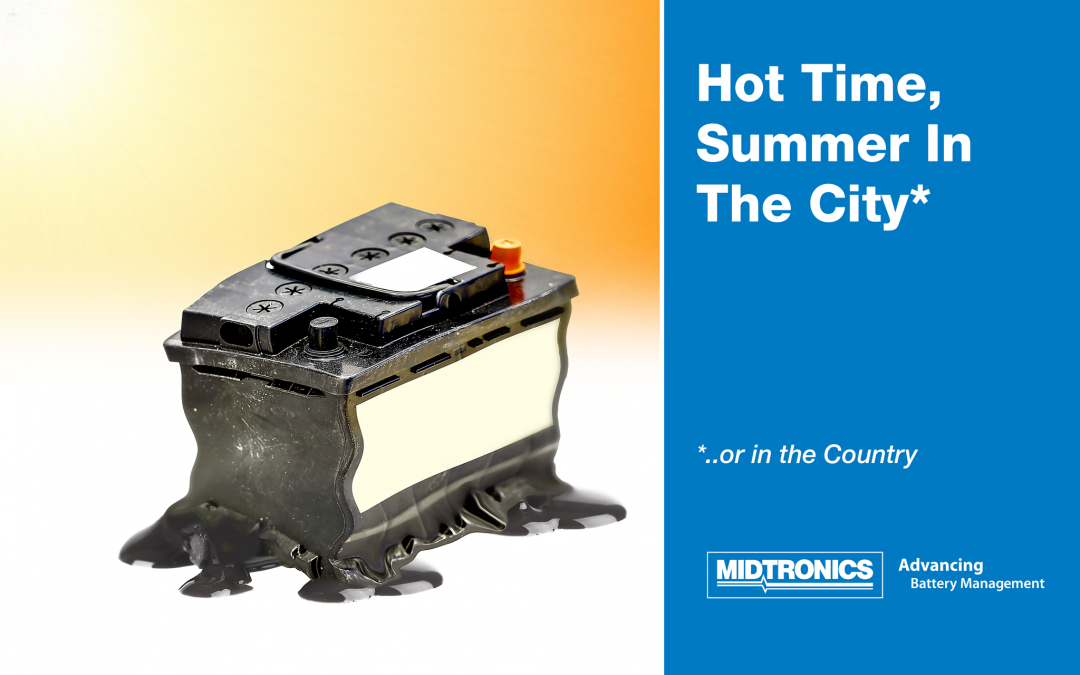
It is no secret that automotive battery performance and lifespan are greatly affected by temperature. Most people believe cold weather is what kills the battery, but it is hot weather that shortens the lifespan of the battery. When the battery gets cold, the chemical reactions are slowed. Slower chemical reactions can prolong the useful life of a battery by slowing the degradation of normal usage over time. However, slower chemical reactions also mean lower battery output capability. Therefore, when it gets cold fast, it appears like your battery instantaneously stops working. But in truth, the cold weather is simply exposing underlying degradation issues.
Key Takeaways
- Heat — not cold — is the primary driver of premature battery failure. High temperatures accelerate the internal chemical reactions that degrade plates and electrolyte.
- For every 15°F (8°C) rise in average operating temperature above 77°F, battery lifespan can be cut roughly in half.
- Summer heat damage is cumulative — batteries often fail in the fall after a hot summer, not during the heat itself.
- Vehicles in hot climates or with batteries in high-heat locations (engine bays without shielding) are at significantly elevated replacement risk.
- Proactive battery testing in late summer and early fall catches heat-compromised batteries before they cause no-starts as temperatures drop.
What happens to batteries in hot temperatures?
In short, hot temperatures shorten the lifespan of the battery. The temperature dependence of chemical reactions is defined by the Arrhenius equation. But more simply put, as the temperature increases so does the speed of the chemical reactions within the battery. The increase in chemical reaction speed can increase the output of the battery, but also increases the speed of battery degradation. This results in regional differences in battery lifespan due to differences in climate region to region. Assuming normal usage, the regional impact of battery life expectancy will directionally look like the example below:
Estimated battery life based on temperature
| Regional climate | Battery life expectancy |
| Cold | 55 months |
| Mild | 45 months |
| Hot | 40 months |
| Extreme Hot | 30 months |
The model above assumes normal usage; however, vehicle usage has been drastically reduced due to the COVID-19 pandemic. Vehicles that are normally driven daily, are spending abnormal amounts of time inside extremely hot garages. Constant self-discharge is a fact of life for all batteries. At normal temperatures, a conventional fully charged battery will lose around 1/100 of a volt per day. Stored for a month, and the battery will lose about a third of its charge.
The self-discharge rate increases as the temperature increases, due to the increased speed of chemical reactions within the battery. Irreversible damage (sulfation) occurs within a battery when stored at low states of charge (below 80% state of charge). Paste shedding, buckling, and other physical defects are also more likely to occur to batteries stored at high temperatures. Therefore, one can expect that decreasing usage during a hot summer (as is with the COVID-19 pandemic) will lead to abnormally high occurrences of batteries stored in a low state of charge. This will undoubtedly reduce the lifespan of batteries.
Do regular preventative battery testing
If you are getting an oil change on a car that has been sitting due to COVID-19, ask the technician to test your battery. If you have a car sitting in a garage with lower than normal usage you may want to consider investing in a battery maintainer or charger. Or if you are servicing customers in a garage be sure to test every battery that comes through. Routine battery maintenance will be essential to ensuring you and/or your customers’ batteries perform when they need to.
What Heat Does Inside the Battery
Heat speeds up almost everything chemical in a battery, and not all of it is helpful. Inside a lead acid battery, the positive grid slowly corrodes, and higher temperatures speed that corrosion up. As the grid weakens, the battery loses its ability to deliver current. The same heat drives off water from the electrolyte in a flooded battery, which exposes the plates and concentrates the acid. Even sealed batteries lose some water vapor over time at high temperatures.
Heat also makes the battery work harder. The alternator has to push more charge to make up for faster self-discharge, and a hot battery can accept more charging voltage than it should, which adds to gassing and water loss. So the battery is being damaged and stressed in several ways at once.
Why the Engine Bay Makes It Worse
The temperature outside is only part of the picture. A battery sitting next to a hot engine or an exhaust manifold can run many degrees warmer than the surrounding air, especially in stop and go traffic or on a long summer drive. After the car shuts off, the heat soaks into the engine bay, and the battery stays warm for a long time.
Some manufacturers add heat shields, move the battery to the trunk or put it in a ventilated box to protect it. If a shield is missing after a previous repair, or a replacement battery is installed without its insulating sleeve, the battery can run hotter than the design intended. It’s an easy item to check during any inspection.
Why Batteries Seem to Fail in Winter
Many shops see a spike in battery complaints on the first cold morning of the year. The cold didn’t kill the battery. A battery that has spent the summer cooking has lost some capacity and cranking power, and the cold, which already reduces what any battery can deliver, finally pushes it below what the engine needs to start. A good test in late summer or early fall can find the weak ones before the temperature drops.
Practical Steps for Hot Weather
Test batteries before and after the hottest months, and recommend a retest if the result is marginal. Check that terminals are clean and tight, because corrosion adds resistance when the system is already under strain. Confirm the hold-down is secure, since vibration on top of heat is hard on the plates. On batteries with removable caps, look at the electrolyte level and top up with distilled water if the manufacturer allows it.
For vehicles that sit, a maintainer helps keep the battery topped off without overcharging. A battery stored hot and partly discharged is the combination that does the most damage.
Frequently Asked Questions
Why does heat shorten car battery life more than cold?
Cold temperatures slow the chemical reactions inside a battery, which reduces performance temporarily — but the battery recovers when temperatures rise. Heat does the opposite: it accelerates internal chemical reactions, which speeds up plate corrosion, water loss from the electrolyte, and overall cell degradation. That damage is permanent. A battery that survives a hot summer is a battery that has aged faster than the calendar suggests.
How much does temperature reduce battery lifespan?
Battery industry research shows that for every 15°F (roughly 8°C) increase in average operating temperature above the baseline of 77°F (25°C), battery service life is approximately cut in half. A battery rated for five years at 77°F may last only two to three years in a region where average temperatures regularly exceed 95°F.
When do heat-damaged batteries typically fail?
Ironically, batteries weakened by summer heat often fail in fall or early winter — not during the hot months. The heat does the damage; the first cold morning delivers the final load. Cold temperatures demand more from the battery (higher cranking current for a cold engine), and a heat-compromised battery often can’t deliver. This is why late-summer and early-fall battery testing is so valuable.
How can technicians identify heat damage during a battery test?
Conductance-based testers like the MDX-600 Series measure state of health directly, regardless of temperature or charge state. A battery showing reduced conductance after a hot summer — even if it’s currently holding charge — may be close to failure. Testing in late summer gives shops and customers time to make an informed replacement decision before the first cold snap.
Does keeping a battery charged prevent heat damage?
Maintaining a full state of charge helps, but it doesn’t prevent the thermal degradation that heat causes. Overcharging — which can happen when a conventional charger runs too long in hot conditions — actually accelerates water loss and plate corrosion. Using a diagnostic charger that monitors and adjusts charge rate based on battery condition is a better approach for vehicles that sit in hot environments.
What standards define battery performance at elevated temperatures?
SAE International publishes battery performance standards (including SAE J537) that include temperature correction factors for testing. These standards help technicians interpret test results accurately across different climate conditions and battery chemistries.