

Key Takeaways
- No-start events caused by bad batteries are among the most disruptive and costly problems fleet operations face — and most are preventable with systematic PM testing.
- Standard PM schedules often miss battery Reserve Capacity decline — a battery can still crank the engine under light loads but fail under the full demand of a cold, heavy-duty start.
- The Midtronics DSS-5000 HD tests 12V and 24V batteries and electrical systems (starter and alternator) with a simple touchscreen interface, producing pass/fail decisions technicians can act on.
- Wi-Fi data transmission from the DSS-5000 HD to a cloud platform lets fleet managers track test results across all shop locations and verify PM compliance.
- A structured PM battery testing protocol — combined with data-driven replacement decisions — converts no-start events from emergencies into planned, manageable maintenance tasks.
- 12 & 24 Volt Pack Testing
- 12 & 24 Volt Electrical System Testing (Starter & Alternator)
- Battery Cranking ability (CCA)
- Battery Reserve Capacity
- Voltage loss from poor connections (cable drop)
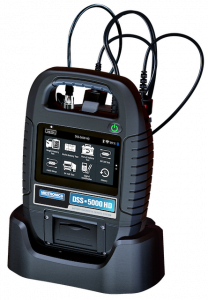 Midtronics DSS-5000HD battery testers diagnose the health of your Heavy-Duty Fleet batteries and report the test results listed above. Large fleets can also be set up to send the data to a centralized, cloud-based repository so Fleet Operations Managers can review, monitor, and analyze the state of health of batteries for the entire fleet. This enables operations and maintenance professionals to implement standard PM battery testing processes and can monitor compliance of the process. The connected DSS-5000 HD tester and reporting provides complete visibility to the adherence to PM testing protocols enabling fleet operations to maintain a rigid battery testing program across all depot facilities. The rich data stream enables operations managers to track and evaluate battery health for all vehicles in the fleet. Real-Time Battery & Electrical System Diagnostics with Alerts from On-Board Battery Monitors There is a solid case for implementing a systemic approach to preventing No-Start events in fleet vehicle pools. Adding a Midtronics BMS-300 on-board battery monitor to existing fleet population is the first step to establishing this Preventative Maintenance battery health ecosystem. The BMS-300 monitors changes in battery voltage, current & temperature. This includes measurements of starting voltage and current as well as the conductance (CCA) of the system during start events. Operations managers receive real-time updates on any vehicle battery equipped with a BMS-300 monitor via CAN-BUS or telematics systems. Batteries that cross thresholds that are deemed to be of imminent concern can be quickly referred to a shop technician that can then perform a deeper battery diagnostic test with the Midtronics DSS-5000 HD tester. The DSS-5000 HD will provide a detailed diagnosis of the battery health, enabling the technician to make an informed judgement on maintenance for the battery in question BEFORE it fails. This system is approaching a phase of Predictive Analytics for battery state of health with the goal of eliminating costly No-Start events. To discuss your specific needs/application, click the button below to fill out the form or email John Philbrook at jphilbrook@midtronics.com.
What a Good Fleet PM Battery Test Covers
A useful preventive maintenance check starts before the tester comes out. A technician should look at the terminals, cable ends and hold-downs, and note any corrosion, damage or looseness. A battery can test fine on the bench and still leave a truck stranded because a cable end is cracked or a clamp isn’t tight.
Next comes the electrical test, and consistency counts. Using the same procedure, battery rating and test points each time makes results comparable across trucks and across months. The test should look at cranking ability and reserve capacity, since those are two different jobs. One tells you whether the battery can start the engine, and the other tells you how long it can carry loads without the alternator.
Finally, check the starting and charging system. A healthy battery will still fail if the alternator undercharges it or the starter draws too much current. Voltage drop across cables and connections is an easy way to find resistance that wastes power and shortens battery life.
Common Reasons Heavy-Duty Batteries Fail Early
Heavy-duty trucks put batteries through a lot. Constant vibration loosens connections and can damage plates. Long idle periods, hotel loads and accessories like liftgates, refrigeration units and telematics draw power when the engine isn’t charging. Add extreme temperatures and the margin for error shrinks.
Mixed batteries in the same bank are another trap. When one battery in a parallel string is older or weaker than the others, the stronger ones carry extra load and wear out sooner. Replacing batteries in matched sets, and testing each one individually, avoids that spiral.
Parasitic draw is a quieter culprit. Aftermarket accessories installed without proper switching can drain a battery overnight, and the cause often isn’t obvious until someone measures it. If a truck keeps needing new batteries, look at the electrical load before you blame the battery brand.
Making the Test Data Useful
A test is only a snapshot, but a series of tests is a story. Record the result, the date, the truck ID and the technician each time. Over several months you can see which trucks are trending down, which depots are skipping tests and whether replacement batteries are holding up.
Set clear rules for what happens next. A “good” result goes back on the schedule. A marginal result might trigger a retest sooner than usual. A “replace” result should lead to a work order that same day, not a note in a binder. When the response is predictable, drivers and dispatchers trust the process, and no-starts become the exception instead of the routine.
Frequently Asked Questions
Why do standard PM schedules miss battery failures?
Most basic PM checks rely on voltage readings or visual inspection — neither of which accurately predicts Reserve Capacity or cranking performance under real load. A battery can show 12.6V at rest and still fail to start a diesel engine in cold temperatures. Conductance-based testing measures actual battery health, not just surface voltage.
What does the DSS-5000 HD test on heavy-duty vehicles?
The DSS-5000 HD tests 12V and 24V battery packs, cranking ability (CCA), Reserve Capacity, starter performance, alternator output, and voltage loss from poor connections — all from a single touchscreen-guided interface. It’s designed for technicians who may not be battery specialists, making consistent, accurate testing achievable across all shop locations.
How does fleet-wide battery test data help prevent no-starts?
When test results from every shop are transmitted to a cloud platform and aggregated in BMIS, fleet managers can see which vehicles are trending toward failure before they go down. They can also verify that PM testing is actually happening on schedule — and identify shops where testing compliance is lagging.
What is battery Reserve Capacity and why does it matter for fleets?
Reserve Capacity measures how long a battery can sustain a defined electrical load after the charging system fails. For fleet vehicles — which often run high-draw accessories like lift gates, refrigeration units, or communications equipment — Reserve Capacity is a critical failure predictor. A battery with low Reserve Capacity will fail under these loads even if it starts the engine fine during a standard crank test.
How often should fleet batteries be tested?
Testing frequency depends on vehicle duty cycle, climate, and age of the fleet. A common starting point is quarterly testing for high-utilization vehicles and semi-annual testing for lighter-duty units. Any vehicle that fails to start, experiences electrical issues, or returns from a harsh environment (extreme heat or cold) should be tested immediately. Midtronics’ HD Solutions team can help design a protocol for your specific operation.
What industry standards define heavy-duty battery testing?
SAE International publishes commercial vehicle battery testing standards including SAE J537 and SAE J2801. Following SAE-aligned procedures ensures test results are consistent and comparable across different technicians, shops, and time periods.